> For the complete documentation index, see [llms.txt](https://docs.avonnicomponents.com/llms.txt). Markdown versions of documentation pages are available by appending `.md` to page URLs; this page is available as [Markdown](https://docs.avonnicomponents.com/projects/use-cases/listings-board.md).

# Listings board

## Overview

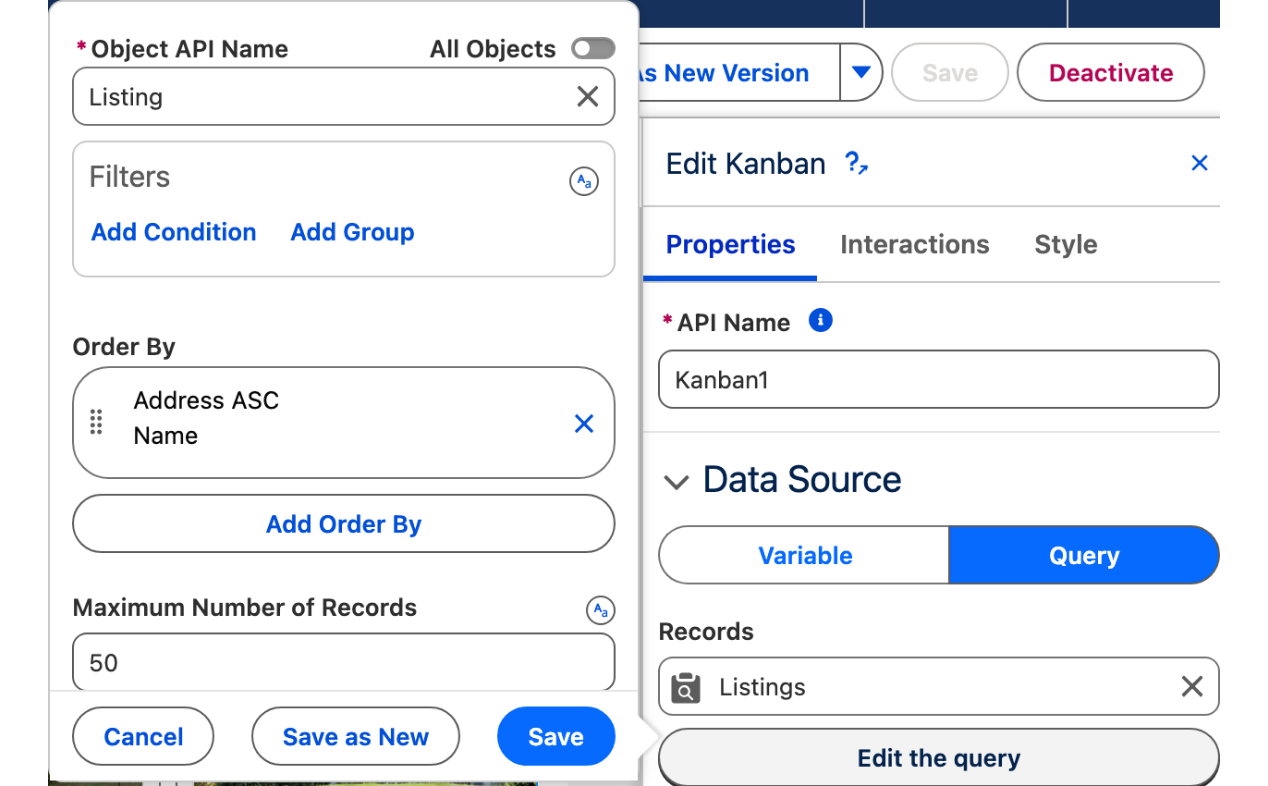
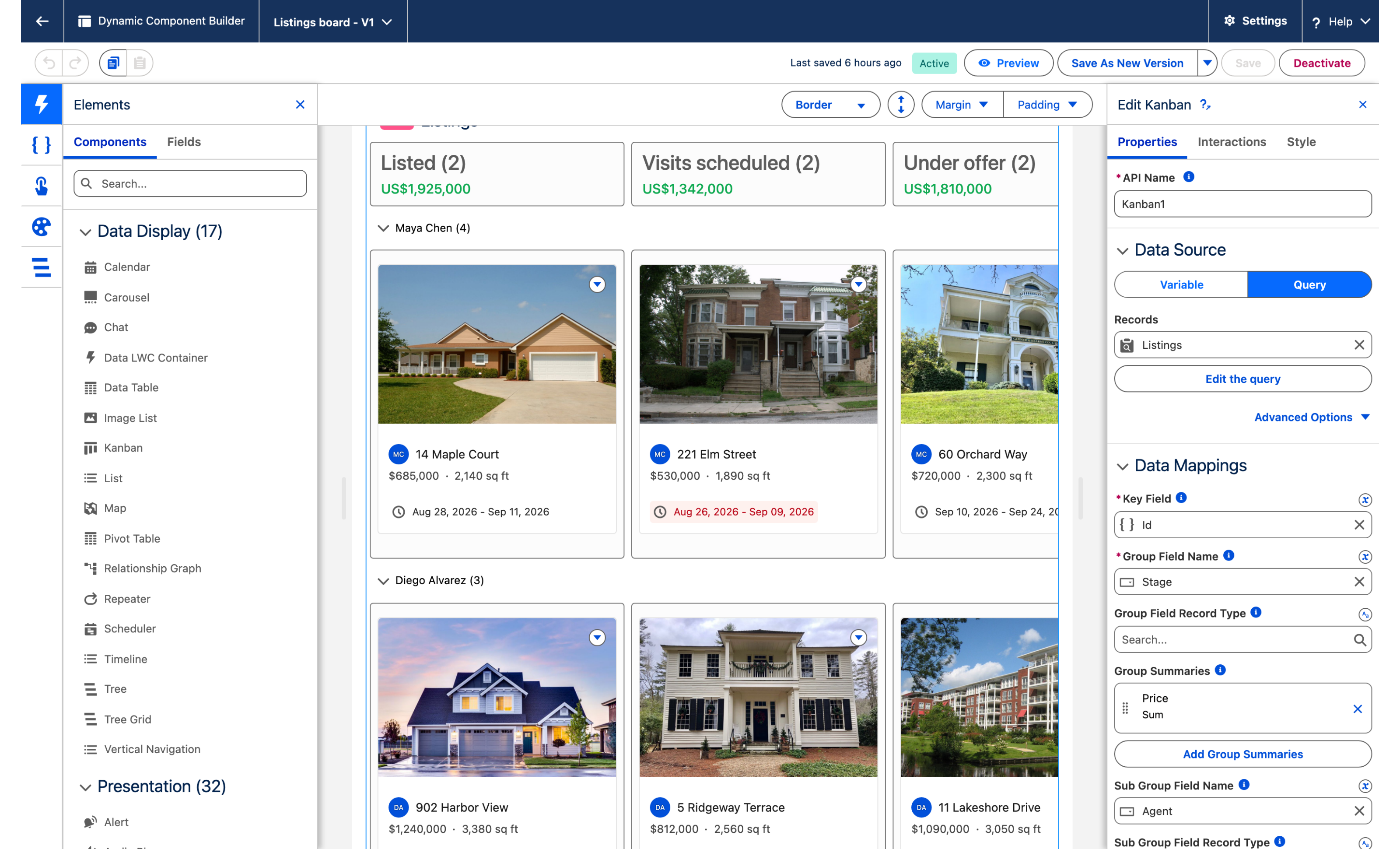
A real estate office follows every listing from listed to sold, one swimlane per agent, with the asking total of each stage in view. The whole tab is one **Kanban** Dynamic Component on a Lightning app page, reading Listing records through a Query data source. This tutorial rebuilds the **Listings** tab of Westside Realty, an estate agency with two agents, in your own org.

## What you build

![Avonni Kanban on a Lightning page: real estate listings grouped by stage, one swimlane per agent, photo on each card and a dollar total per column](https://3857391697-files.gitbook.io/~/files/v0/b/gitbook-x-prod.appspot.com/o/spaces%2FdHOej9Pd5IxJNGEJMZKW%2Fuploads%2FRQHNE5GHUUIE8CcpyDxb%2Fuc-01-listings-board.png?alt=media)

* Westside Realty has seven listings across two agents. Four columns, Listed, Visits scheduled, Under offer and Sold, each with its count and the sum of its asking prices at the top.
* Two swimlanes cut across the columns: Maya Chen (4) and Diego Alvarez (3).
* Each card carries the property photo, the agent's initials, the address, the asking price, the square footage and the listing window.
* A window that has slipped past today turns red. In the figure that is 8 Willow Close, whose window ended on Sep 2, 2026.
* A search box sits in the header, and every card has a menu with Schedule visit and Share listing.

## Before you start

{% hint style="info" %}
**Adapt this to your own org.** The object and the fields below are what this tutorial creates, not what the component requires. If your listings already live somewhere, in a custom object of your own or in another object entirely, point the query at it and map your own fields at the same steps. What the board actually needs is a picklist to build the columns from, a second picklist for the lanes, and a Number, Currency or Percent field for the totals.
{% endhint %}

* The [Avonni Experience Components](https://appexchange.salesforce.com/appxListingDetail?listingId=2e584bb3-b5e0-415d-9347-d6567158d840) package, which carries Dynamic Components, is installed. Whoever builds the component needs the **Avonni Experiences Admin** permission set; the people who use the page need a license and **Avonni Dynamic Components User**. See [Installation & Licenses Management](https://docs.avonnicomponents.com/dynamic-components/getting-started/installation-and-licenses-management).
* A Lightning app with an app page for the board. The examples below use the **Westside Realty** app and its **Listings** tab.
* A custom object for the listings. The board needs these fields:

| Object                 | Field               | Type                                                                         | Role                                                                                                                        |
| ---------------------- | ------------------- | ---------------------------------------------------------------------------- | --------------------------------------------------------------------------------------------------------------------------- |
| Listing (`Listing__c`) | `Name`              | Text                                                                         | The address, `14 Maple Court`. The card title.                                                                              |
|                        | `Stage__c`          | Picklist: `Listed`, `Visits scheduled`, `Under offer`, `Sold`, in that order | One column per value, in picklist order                                                                                     |
|                        | `Agent__c`          | Picklist: `Maya Chen`, `Diego Alvarez`                                       | One swimlane per value. A picklist, not a text or lookup field: the board builds its lanes from picklist values, see step 4 |
|                        | `Price__c`          | Currency, 0 decimal places                                                   | The asking price, summed at the top of each column                                                                          |
|                        | `Square_Feet__c`    | Number, 0 decimal places                                                     | The surface                                                                                                                 |
|                        | `Photo_URL__c`      | URL                                                                          | The photo on the card                                                                                                       |
|                        | `Window_Start__c`   | Date                                                                         | The first day of the listing window                                                                                         |
|                        | `Window_End__c`     | Date                                                                         | The last day. Once it is behind today, the window turns red                                                                 |
|                        | `Agent_Initials__c` | Formula (Text)                                                               | `MC` or `DA` on the card, see step 1                                                                                        |
|                        | `Price_Label__c`    | Formula (Text)                                                               | `$685,000` on the card, see step 1                                                                                          |
|                        | `Area_Label__c`     | Formula (Text)                                                               | `2,140 sq ft` on the card, see step 1                                                                                       |

**Sample data.** Seven listings:

| Address            | Stage            | Agent         | Price     | Sq ft | Window start | Window end   |
| ------------------ | ---------------- | ------------- | --------- | ----- | ------------ | ------------ |
| 14 Maple Court     | Listed           | Maya Chen     | 685,000   | 2,140 | Aug 29, 2026 | Sep 12, 2026 |
| 902 Harbor View    | Listed           | Diego Alvarez | 1,240,000 | 3,380 | Aug 31, 2026 | Sep 14, 2026 |
| 5 Ridgeway Terrace | Visits scheduled | Diego Alvarez | 812,000   | 2,560 | Aug 25, 2026 | Sep 8, 2026  |
| 221 Elm Street     | Visits scheduled | Maya Chen     | 530,000   | 1,890 | Aug 27, 2026 | Sep 10, 2026 |
| 60 Orchard Way     | Under offer      | Maya Chen     | 720,000   | 2,300 | Sep 11, 2026 | Sep 25, 2026 |
| 11 Lakeshore Drive | Under offer      | Diego Alvarez | 1,090,000 | 3,050 | Sep 16, 2026 | Sep 30, 2026 |
| 8 Willow Close     | Sold             | Maya Chen     | 498,000   | 1,710 | Aug 19, 2026 | Sep 2, 2026  |

Each listing needs a photo the org can load: a static resource (`/resource/Listing_Photos/maple-court.jpg`), a Salesforce File, or an external URL your org's Trusted URLs allow. Use your own photos; the ones in the figure are not part of this tutorial.

**Permissions.** Users need Read on Listing and its fields. Dragging a card writes **Stage** (and **Agent**, when the card changes lane) to the record, so anyone who moves cards needs Edit on those two fields.

## Build it

{% stepper %}
{% step %}

### Create the object, the three formulas and the records

1. In **Setup**, open **Object Manager** and create the **Listing** object with the fields listed above. Enter the picklist values of **Stage** and **Agent** in the order given: that order becomes the order of the columns and the lanes.
2. Add the **Agent Initials** formula field (return type Text):

```
LEFT(TEXT(Agent__c), 1) & MID(TEXT(Agent__c), FIND(" ", TEXT(Agent__c)) + 1, 1)
```

3. Add the **Price Label** formula field (return type Text):

```
"$" &
IF(Price__c >= 1000000, TEXT(FLOOR(Price__c / 1000000)) & ",", "") &
IF(Price__c >= 1000,
   IF(Price__c >= 1000000,
      RIGHT("00" & TEXT(FLOOR(MOD(Price__c, 1000000) / 1000)), 3),
      TEXT(FLOOR(Price__c / 1000))) & "," &
   RIGHT("00" & TEXT(FLOOR(MOD(Price__c, 1000))), 3),
   TEXT(FLOOR(Price__c)))
```

4. Add the **Area Label** formula field (return type Text):

```
IF(Square_Feet__c >= 1000,
   TEXT(FLOOR(Square_Feet__c / 1000)) & "," & RIGHT("00" & TEXT(FLOOR(MOD(Square_Feet__c, 1000))), 3),
   TEXT(Square_Feet__c)) & " sq ft"
```

5. Load the seven sample listings.

*Why:* the card's info line prints a field's value as it is stored, so a currency field mapped there reads `685000`. The formulas hand the card `$685,000` and `2,140 sq ft`. The column total is different: the board formats it itself from the currency field, no formula needed.
{% endstep %}

{% step %}

### Create the Dynamic Component and add the Kanban

1. From the App Launcher, open the **Avonni Components App** and click **New Component**.
2. Name it `Listings board` and leave **Target Page Object** empty: the board lives on an app page, not a record page.
3. Drag **Kanban** onto the canvas and select it. The **Edit Kanban** panel opens on the right with the **Properties**, **Interactions** and **Style** tabs.
   {% endstep %}

{% step %}

### Connect the query

1. In the **Data Source** section, select **Query** and click **Create Query**.
2. Choose the **Listing** object.
3. Set **Order By** to `Name`, ascending, and click **Done**.

*Why:* no filter. The board shows every listing of the office, and the columns and lanes do the sorting. See [Query](https://docs.avonnicomponents.com/dynamic-components/component-builder/data-sources/query) for filters when you want one board per office.
{% endstep %}

{% step %}

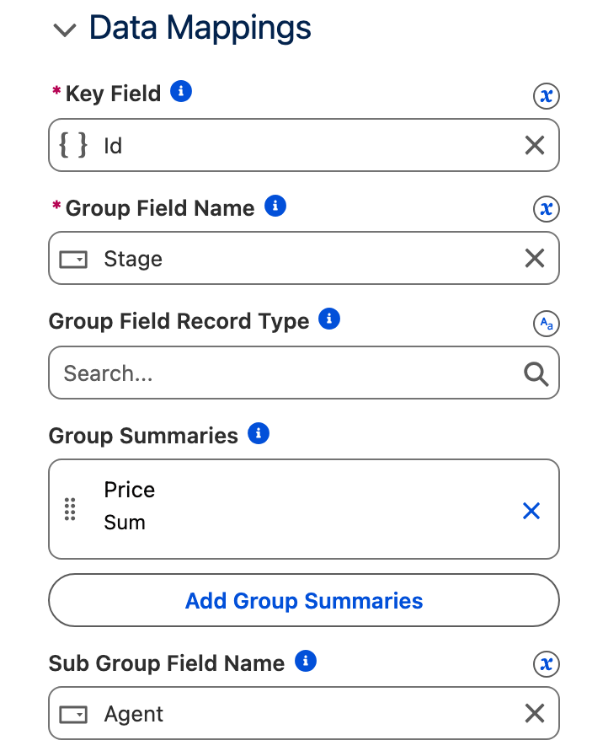
### Map the columns, the lanes and the total

In the **Data Mapping** section:

1. Leave **Key Field** on `{{Record.Id}}`.
2. Set **Group Field Name** to `Stage__c`.
3. Set **Sub Group Field Name** to `Agent__c`.
4. Set **Summarize Field Name** to `Price__c`.

*Why:* the columns are the picklist values of the group field, in picklist order, and the lanes are the picklist values of the sub-group field. A text or lookup field gives the board nothing to build columns or lanes from, which is why **Agent** is a picklist. The summary adds up the mapped field for the cards of each column and formats it like the field: a Currency field with 0 decimal places reads `$1,925,000`.
{% endstep %}

{% step %}

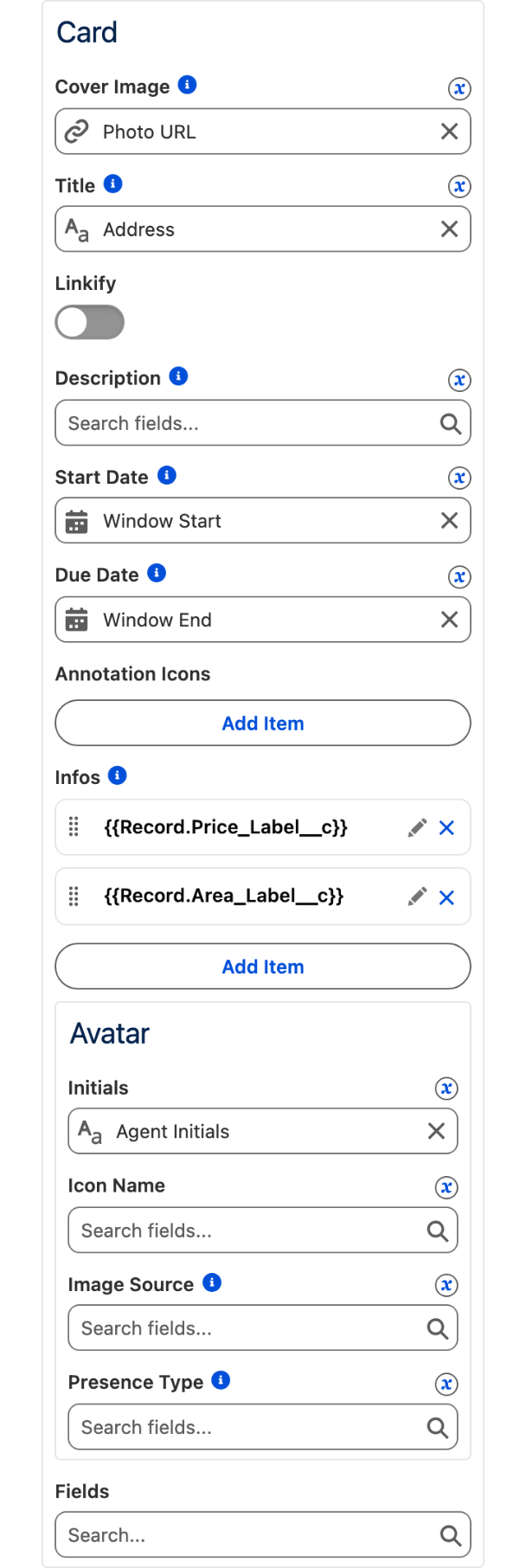
### Map the card

Still in **Data Mapping**, under **Card**:

1. **Cover Image**: `Photo_URL__c`.
2. **Title**: `Name`.
3. **Start Date**: `Window_Start__c`. **Due Date**: `Window_End__c`.
4. **Infos**: add two entries, the first with **Label** `Price_Label__c`, the second with **Label** `Area_Label__c`.
5. Under **Avatar**, set **Initials** to `Agent_Initials__c`.

*Why:* map both dates, not one. The date row appears only when **Start Date** is set, and a card with no **Due Date** is treated as overdue, so **Start Date** alone paints every card red. With both, only a window that ended before today is red.
{% endstep %}

{% step %}

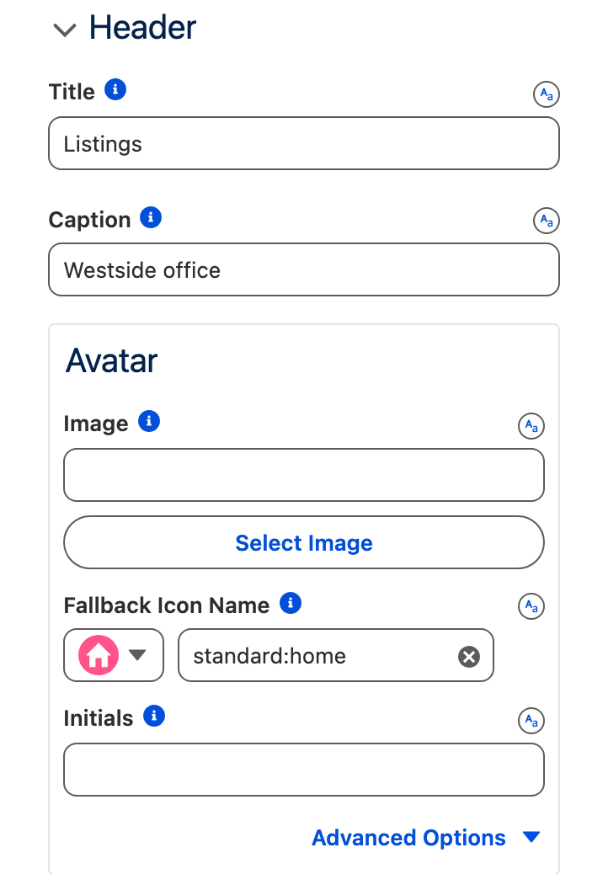
### Set the header and the search

1. In the **Header** section, set **Title** to `Listings` and **Caption** to `Westside office`. Under **Avatar**, set **Fallback Icon Name** to `standard:home`.
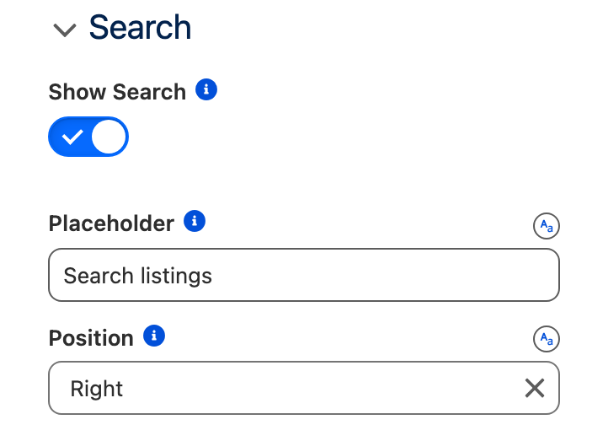
2. In the **Search** section, turn on **Show Search**, set **Placeholder** to `Search listings` and **Position** to **Right**.
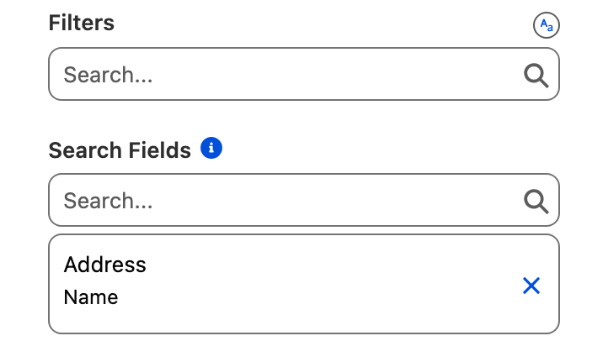
3. Back in **Data Mapping**, set **Search Fields** to `Name`.

*Why:* the search box appears only when **Show Search** is on, and it searches the fields you list, so a board without **Search Fields** has a box that finds nothing.
{% endstep %}

{% step %}

### Finish the board settings

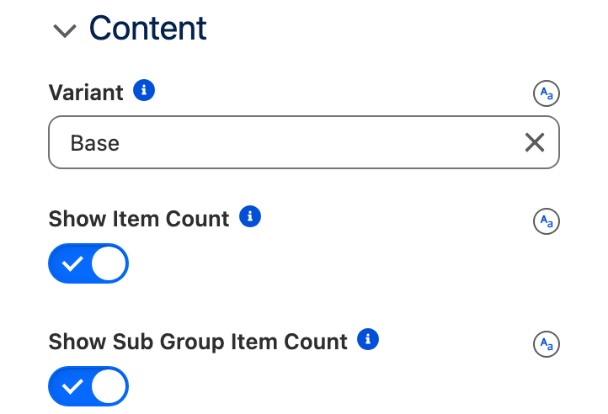
1. In **Content**, turn on **Show Item Count** and **Show Sub Group Item Count**.
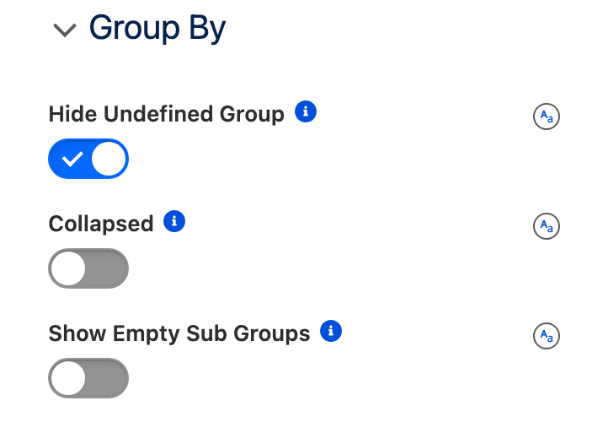
2. In **Group By**, turn on **Hide Undefined Group**.
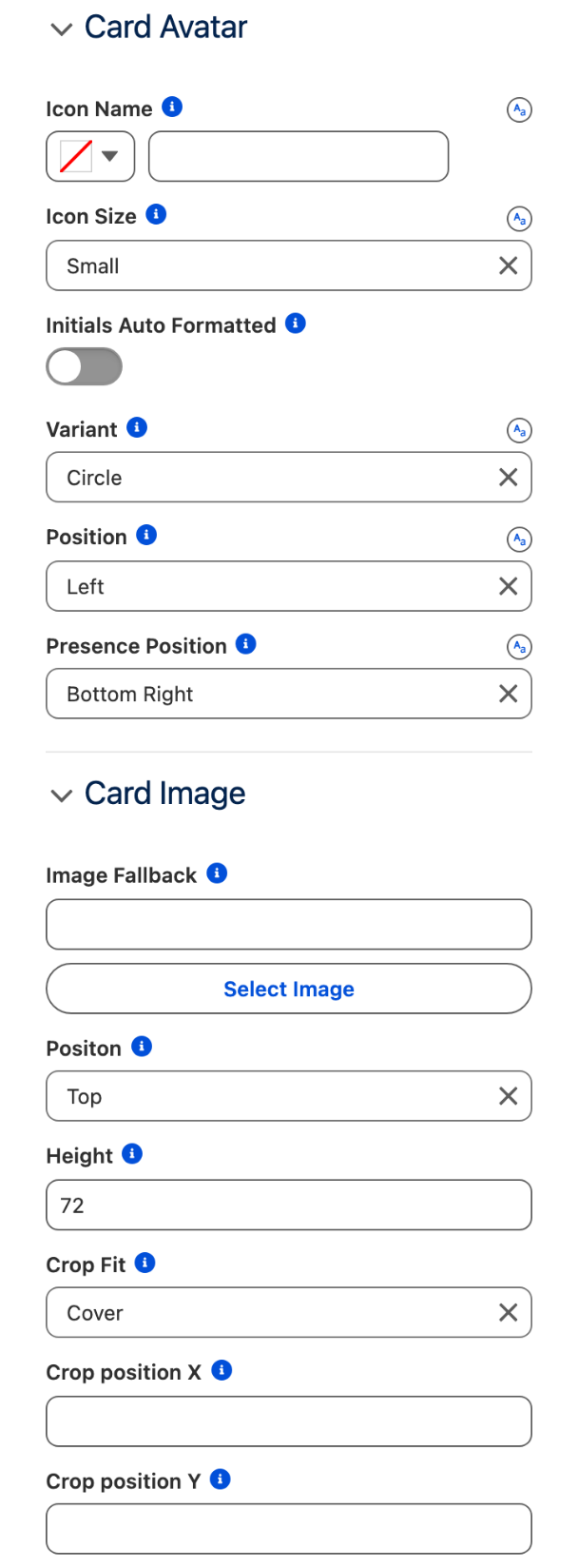
3. In **Card Avatar**, set **Variant** to **Circle**, **Icon Size** to **Small** and **Position** to **Left**.
4. In **Card Image**, set **Position** to **Top**, **Height** to `72` and **Crop Fit** to **Cover**.

*Why:* every listing has a stage. Without **Hide Undefined Group**, a fifth column named Undefined takes width from the four that matter whenever **Stage** is not a required field.
{% endstep %}

{% step %}

### Add the card actions

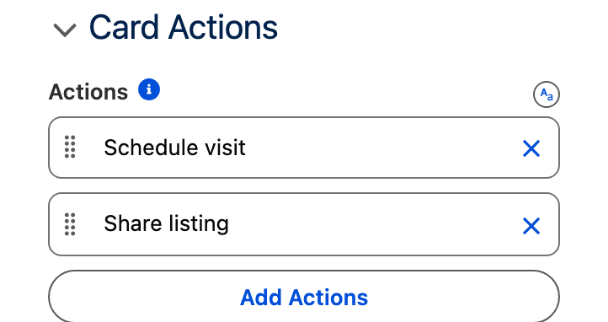
In **Card Actions**, add two actions:

* **Label** `Schedule visit`, **Name** `scheduleVisit`
* **Label** `Share listing`, **Name** `shareListing`

*Why:* the actions put the menu on every card. What each one does is wired on the **Interactions** tab, see Interactions below.
{% endstep %}

{% step %}

### Save, activate, add to the page

1. Click **Save**, then **Activate**.
2. In **Lightning App Builder**, open the app page, drag **AX - Dynamic Component** onto it and select `Listings board` in its **Properties Panel**.
3. Click **Save**, then **Activate** the page for the app. See [Publishing your Dynamic Components](https://docs.avonnicomponents.com/dynamic-components/core-concepts/publishing-your-dynamic-components).
   {% endstep %}
   {% endstepper %}

## The settings that matter

| Setting                                                                                                    | Value                              | Why                                                                              |
| ---------------------------------------------------------------------------------------------------------- | ---------------------------------- | -------------------------------------------------------------------------------- |
| **Group Field Name** (`groupFieldName`)                                                                    | `Stage__c`                         | One column per picklist value, in picklist order                                 |
| **Sub Group Field Name** (`subGroupFieldName`)                                                             | `Agent__c`                         | One swimlane per agent, from the picklist values                                 |
| **Summarize Field Name** (`summarizeAttributes`)                                                           | `Price__c`                         | The sum of the asking prices at the top of each column, formatted like the field |
| **Cover Image** (`cardAttributes.coverImage`) and **Card Image** **Position** (`imageAttributes.position`) | `Photo_URL__c`, **Top**            | The photo becomes the card                                                       |
| **Start Date** and **Due Date** (`cardAttributes.startDate`, `cardAttributes.dueDate`)                     | `Window_Start__c`, `Window_End__c` | The listing window, red once it has passed                                       |

## Interactions

The figure shows the board at rest: no interaction is configured in it. These are the ones the board is built for, with the trigger and action names as the **Interactions** tab lists them.

| Trigger                                                | Action                                                                                                                              | What to set                                                                                                                                                                                                           |
| ------------------------------------------------------ | ----------------------------------------------------------------------------------------------------------------------------------- | --------------------------------------------------------------------------------------------------------------------------------------------------------------------------------------------------------------------- |
| The end user drags a card to another column or lane    | Built in: the board writes the new **Stage** (and **Agent**, across lanes) to the record before any interaction runs                | Nothing. Edit access on the two fields decides whether the save goes through.                                                                                                                                         |
| **Item Drop**                                          | [Refresh Query](https://docs.avonnicomponents.com/dynamic-components/component-builder/interactions/refresh-query)                  | Leave the component list empty: the board itself refreshes. It re-reads its records after every drop, so a move Salesforce refused (a validation rule, missing access) puts the card back where the record really is. |
| **Item Click**                                         | [Navigate](https://docs.avonnicomponents.com/dynamic-components/component-builder/interactions/navigate)                            | **Page Reference Type** Record Page, **Object API Name** `Listing__c`, **Record Id** `{{Record.Id}}`, **Action Name** view.                                                                                           |
| **Item Action Click**, **Target Name** `scheduleVisit` | [Open Flow Dialog](https://docs.avonnicomponents.com/dynamic-components/component-builder/interactions/open-flow-dialog)            | The screen flow that books a visit, with `{{Record.Id}}` as its listing input variable.                                                                                                                               |
| **Item Action Click**, **Target Name** `shareListing`  | [Show Toast](https://docs.avonnicomponents.com/dynamic-components/component-builder/interactions/show-toast), or a flow of your own | A message such as `Listing shared`, until the sharing flow exists.                                                                                                                                                    |

The drop is not a gate. A card the platform refuses to move (a validation rule, a required field) still shows in the target column until the board reloads, which is what the **Item Drop** refresh is for. To block a move, write a validation rule on **Stage** and keep the refresh.

## Try it

1. Open the **Listings** tab. Four columns with their counts and totals, Listed (2) $1,925,000, Visits scheduled (2) $1,342,000, Under offer (2) $1,810,000, Sold (1) $498,000, and two lanes, Maya Chen (4) and Diego Alvarez (3).
2. Type `Elm` in **Search listings**: one card left, 221 Elm Street, in Maya Chen's Visits scheduled lane. Clear the search.
3. Drag 60 Orchard Way from Under offer to Sold. Under offer reads (1) $1,090,000, Sold reads (2) $1,218,000, and the record's **Stage** is now Sold. Drag it back.
4. Look at the dates. 8 Willow Close is red on any day after Sep 2, 2026, and each of the other windows turns red the day after its **Window end**.

## Take it further

The same board exists on the other Avonni surfaces:

* [Kanban](https://docs.avonnicomponents.com/flow/flow-components/kanban) for Flow Screen Components, inside a screen flow.
* [AX - Kanban](https://docs.avonnicomponents.com/experience-cloud/experience-components/ax-kanban) for Experience Sites.
* [Kanban](https://docs.avonnicomponents.com/lwc-components/data-driven-components/kanban) for LWC Components, as the `avonni-dd-kanban` tag in your own component.

Three variations worth trying:

* Switch **Variant** to **Path** in **Content**: the four stages become a horizontal path, and the board keeps its cards.
* Add `Agent__c` under **Filters** in **Data Mapping**: a filter appears above the board, and the office can look at one agent's listings at a time.
* Two cards in the figure carry a star. Under **Card**, **Annotation Icons** takes an icon name or a field: add a Checkbox `Starred__c` and a Text formula that returns `utility:favorite` when it is checked, and map the icon to that formula.

## Troubleshooting

| Problem                                                         | Cause                                                                                                                                         | Fix                                                                                                     |
| --------------------------------------------------------------- | --------------------------------------------------------------------------------------------------------------------------------------------- | ------------------------------------------------------------------------------------------------------- |
| The board shows a single Undefined column, or no column at all  | **Group Field Name** points to a text, number or lookup field. In a Query data source the columns are the picklist values of the group field. | Group by a picklist field, and enter its values in the order you want the columns.                      |
| The lanes are missing, or every card sits in one Undefined lane | **Sub Group Field Name** points to a field that is not a picklist. Lanes are built the same way as columns.                                   | Make **Agent** a picklist with one value per agent.                                                     |
| Every card's date row is red, even for dates months away        | **Start Date** is mapped and **Due Date** is not. A card without a due date counts as overdue.                                                | Map **Due Date** to `Window_End__c`.                                                                    |
| No dates on the cards although **Due Date** is mapped           | The date row shows only when **Start Date** is mapped.                                                                                        | Map **Start Date** to `Window_Start__c`.                                                                |
| The column headers show the count but no total                  | **Summarize Field Name** is empty, or points to a field that is not a Number, Currency or Percent.                                            | Map it to `Price__c`.                                                                                   |
| The cards show no photo                                         | The URL in `Photo_URL__c` is not one the org can load: a wrong static resource path, or an external host that is not in your Trusted URLs.    | Fix the URL, and set **Image Fallback** in **Card Image** so a missing photo still leaves a clean card. |


---

# Agent Instructions
This documentation is published with GitBook. GitBook is the documentation platform designed so that both humans and AI agents can read, navigate, and reason over technical content effectively. Learn more at gitbook.com.

## Querying This Documentation
If you need additional information that is not directly available in this page, you can query the documentation dynamically by asking a question.

Perform an HTTP GET request on the current page URL with the `ask` query parameter, and the optional `goal` query parameter:

```
GET https://docs.avonnicomponents.com/projects/use-cases/listings-board.md?ask=<question>&goal=<endgoal>
```

`ask` is the immediate question: it should be specific, self-contained, and written in natural language.
`goal` is optional and describes the broader end goal you are ultimately trying to accomplish on behalf of the user. GitBook uses it to tailor the answer towards what is most useful for that goal.

The response will contain a direct answer to the question and relevant excerpts and sources from the documentation.

Use this mechanism when the answer is not explicitly present in the current page, you need clarification or additional context, or you want to retrieve related documentation sections.