> For the complete documentation index, see [llms.txt](https://docs.avonnicomponents.com/llms.txt). Markdown versions of documentation pages are available by appending `.md` to page URLs; this page is available as [Markdown](https://docs.avonnicomponents.com/flow/tutorials/interactions/how-to-create-an-interaction-to-open-another-flow.md).
# How to create an interaction to open another flow
## Overview
This tutorial delves into the process of setting up an interaction that triggers the opening of another flow. This functionality is handy for creating seamless navigation between different processes or tasks within Salesforce. Following this tutorial, you will learn how to enhance the user experience by integrating interconnected flows, making your Salesforce environment more dynamic and efficient.
{% hint style="info" %}
**Before diving into this tutorial**
Ensure you add either [an action button](/flow/flow-components/data-table.md#customizing-the-header-appearance) or [a row action](/flow/flow-components/data-table.md#create-row-actions) to the initial component from which you want to launch another flow. This will be the starting point for users to initiate the new flow.
{% endhint %}
## Step-by-Step Tutorial
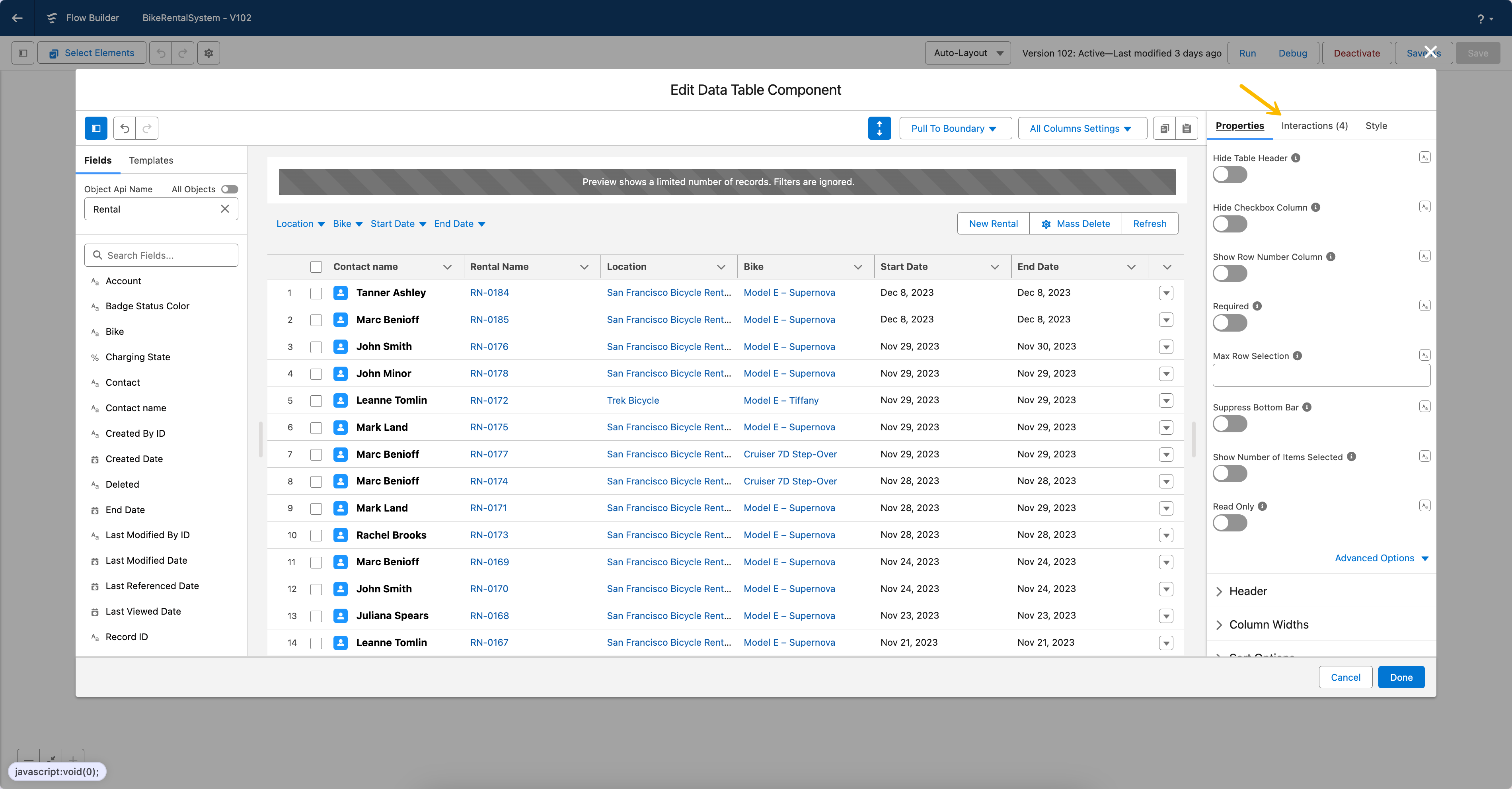
### **Step 1: Access the Interaction Panel**
Navigate to the interaction panel to set up the flow's interactive elements.
### **Step 2: Create an Interaction**
Proceed to create a new interaction that will act upon the action button or row action you've just made.
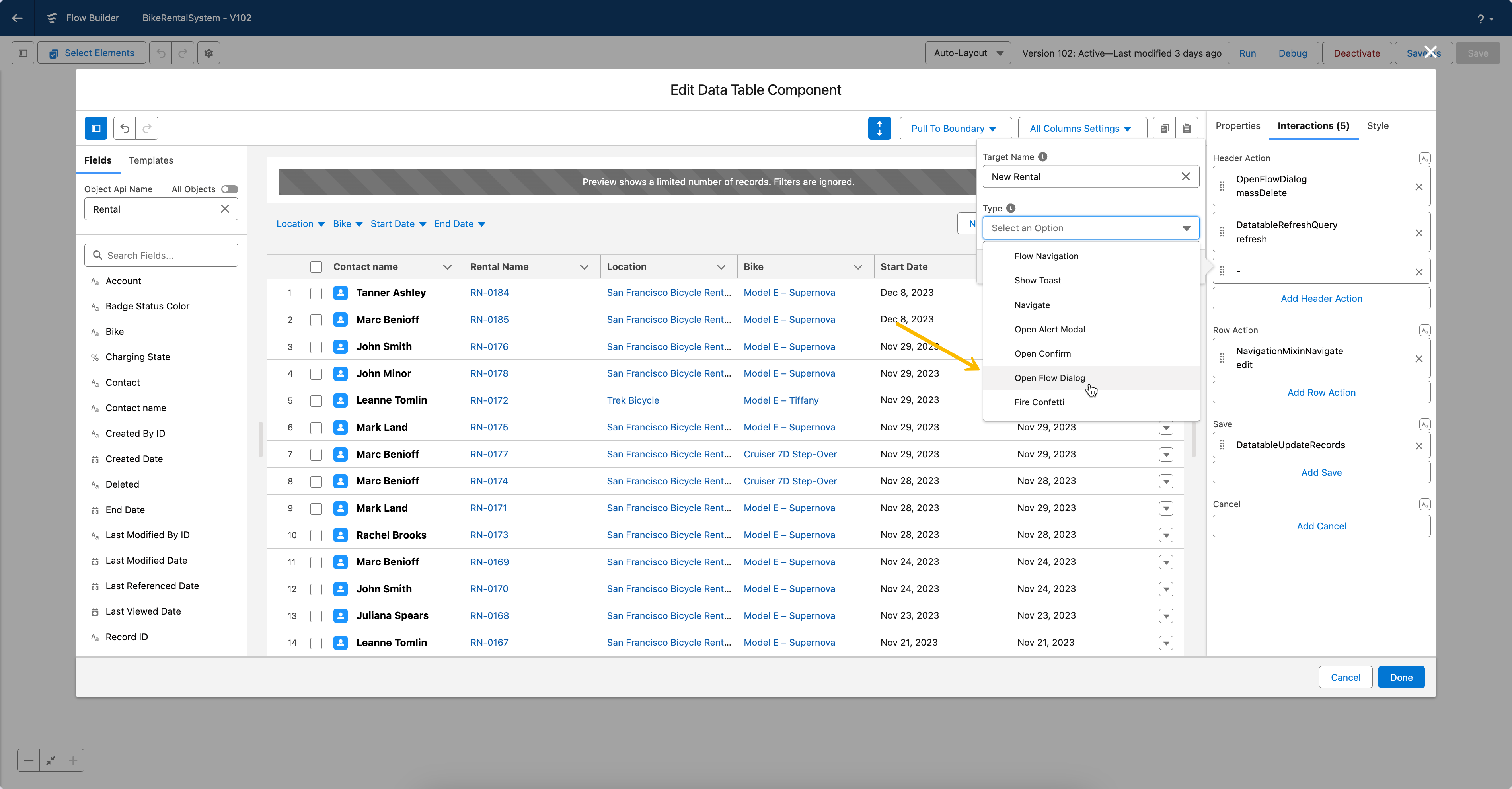
### **Step 3: Define the Interaction Target**
Assign the previously designed action button or row action as the target for this interaction.
### **Step 4: Choose Interaction Type**
For the interaction type, opt for "Open Flow Dialog," which prompts a new flow to open upon activation.
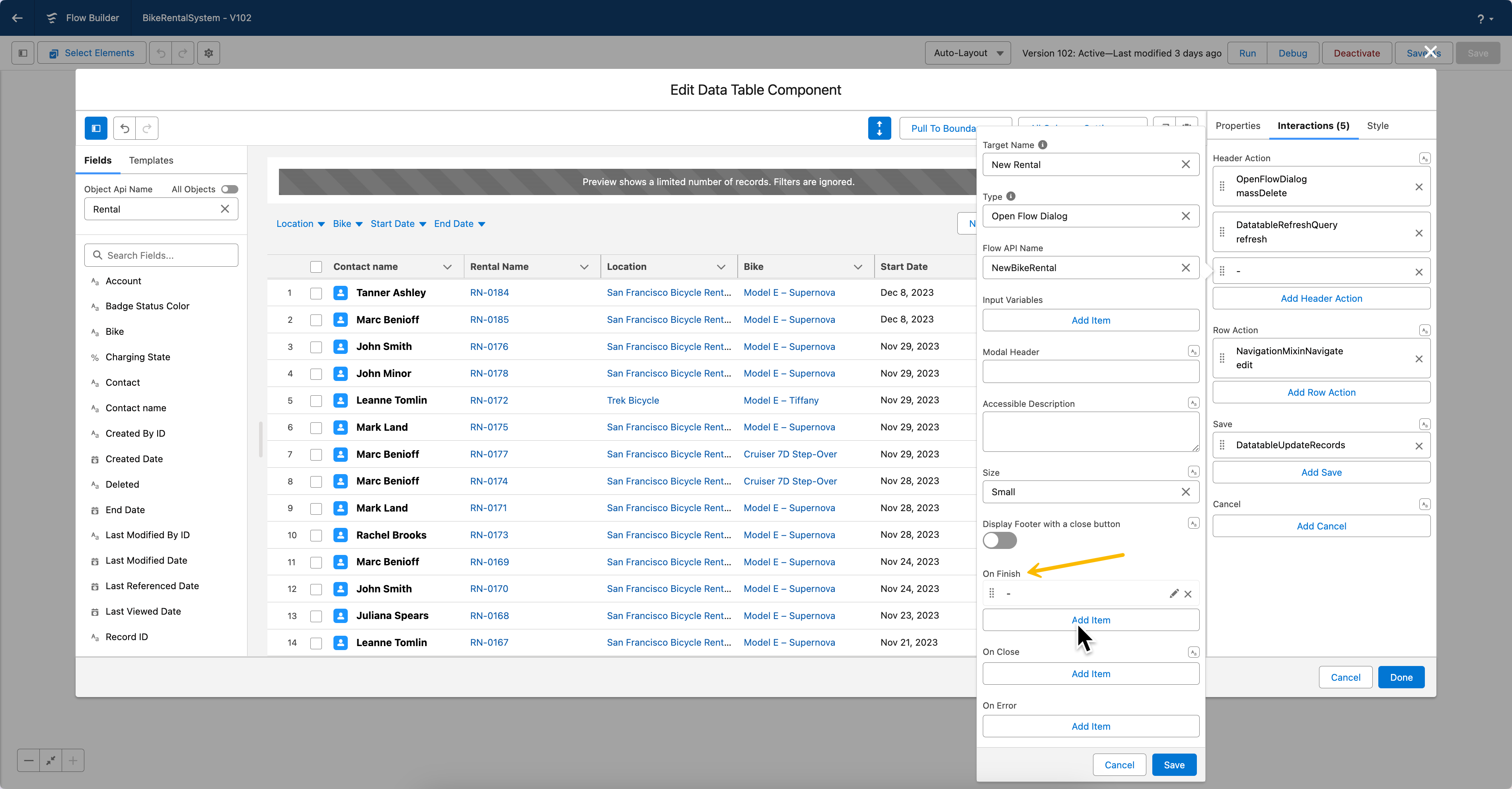
### **Step 5: Select the Desired Flow**
Identify and select the particular flow that this interaction should launch.
### **Step 6: Assign Input Variables**
If necessary, relay any required input variables to the flow that is being opened.
{% hint style="info" %}
**Related**: [How to pass an input variable from one flow to another](/flow/tutorials/interactions/how-to-pass-an-input-variable-from-one-flow-to-another.md).
{% endhint %}
### **Step 7: Configure 'On Finish' Interaction**
Once you have arranged the primary sequence of tasks, select the 'On Finish' option. This allows you to determine and establish the actions or responses initiated when the entire process is successfully completed."
This step is helpful and has various use cases:
1. **Feedback or Confirmation Messages**: It's common to configure a message or alert that confirms the successful completion of the process to the user.
2. **User Experience Enhancement**: In user-facing applications, configuring a friendly and informative 'On Finish' interaction can enhance the user experience by providing clear communication about their request or action status.
Overall, this step is integral in ensuring that the end of a process is handled efficiently and effectively, aligning with the overall goal of the workflow.
{% hint style="info" %}
**Related**: [Enabling auto-refresh for queries after the Flow Dialog ends](/flow/tutorials/interactions/enabling-auto-refresh-for-queries-after-the-flow-dialog-ends.md)
{% endhint %}
---
# Agent Instructions
This documentation is published with GitBook. GitBook is the documentation platform designed so that both humans and AI agents can read, navigate, and reason over technical content effectively. Learn more at gitbook.com.
## Querying This Documentation
If you need additional information that is not directly available in this page, you can query the documentation dynamically by asking a question.
Perform an HTTP GET request on the current page URL with the `ask` query parameter, and the optional `goal` query parameter:
```
GET https://docs.avonnicomponents.com/flow/tutorials/interactions/how-to-create-an-interaction-to-open-another-flow.md?ask=&goal=
```
`ask` is the immediate question: it should be specific, self-contained, and written in natural language.
`goal` is optional and describes the broader end goal you are ultimately trying to accomplish on behalf of the user. GitBook uses it to tailor the answer towards what is most useful for that goal.
The response will contain a direct answer to the question and relevant excerpts and sources from the documentation.
Use this mechanism when the answer is not explicitly present in the current page, you need clarification or additional context, or you want to retrieve related documentation sections.