> For the complete documentation index, see [llms.txt](https://docs.avonnicomponents.com/llms.txt). Markdown versions of documentation pages are available by appending `.md` to page URLs; this page is available as [Markdown](https://docs.avonnicomponents.com/flow/tutorials/components/data-table/adding-filters.md).
# Adding Filters
This tutorial guides you through the straightforward process of adding field filters to your [Avonni Data Table](/flow/flow-components/data-table.md). Enabling filters gives end-users the power to sort and find the data they need quickly. This guide has you covered, starting with component setup and data source selection, dragging fields into the Datatable, and finally activating filters.
Perfect your Datatable functionality and improve user interaction in just a few easy steps!
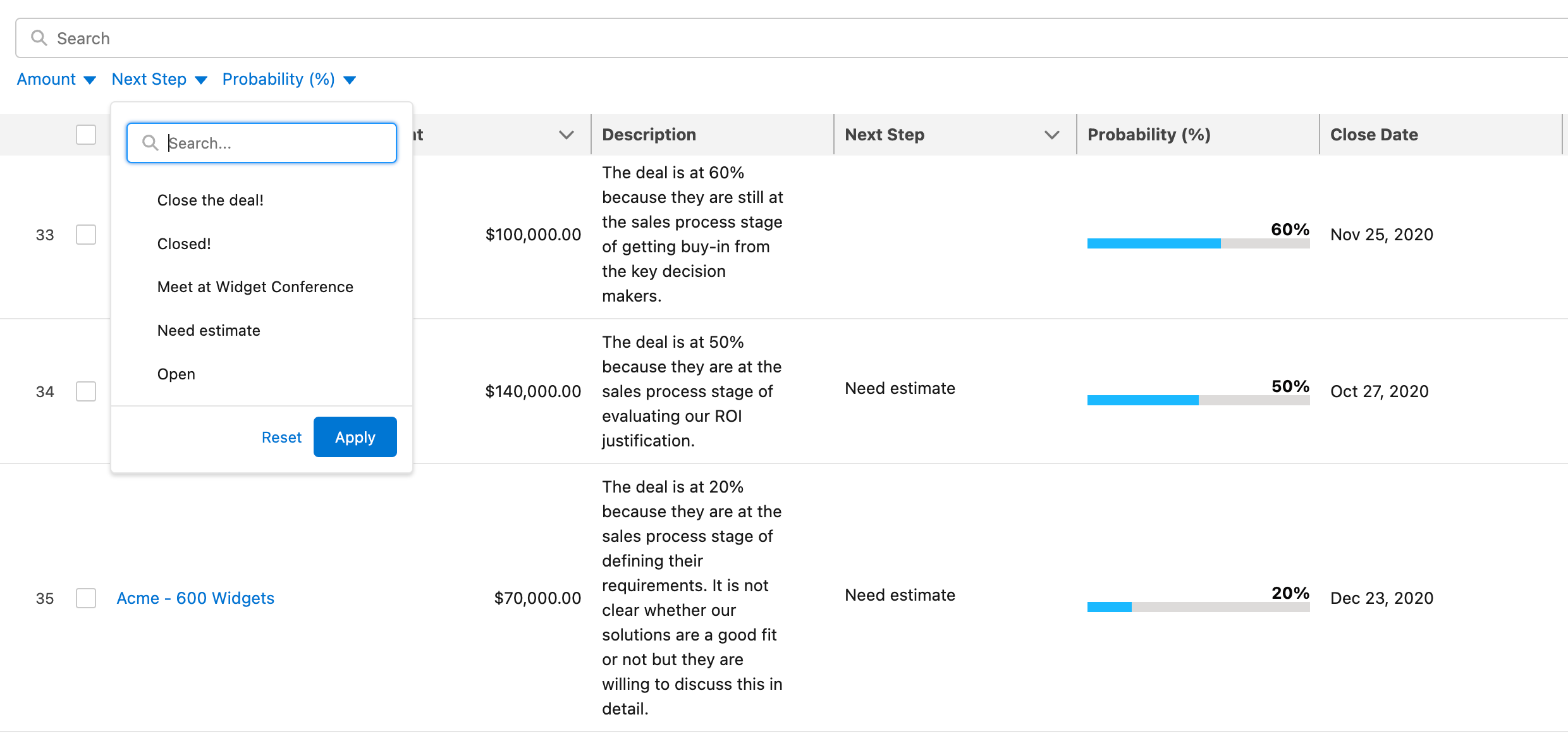
Final result with filters
### **1. Configure the Avonni Datatable component**
* Select the **Datatable component**
* Open the **Component Builder** to access advanced settings
### **2. Select a source collection a data source**
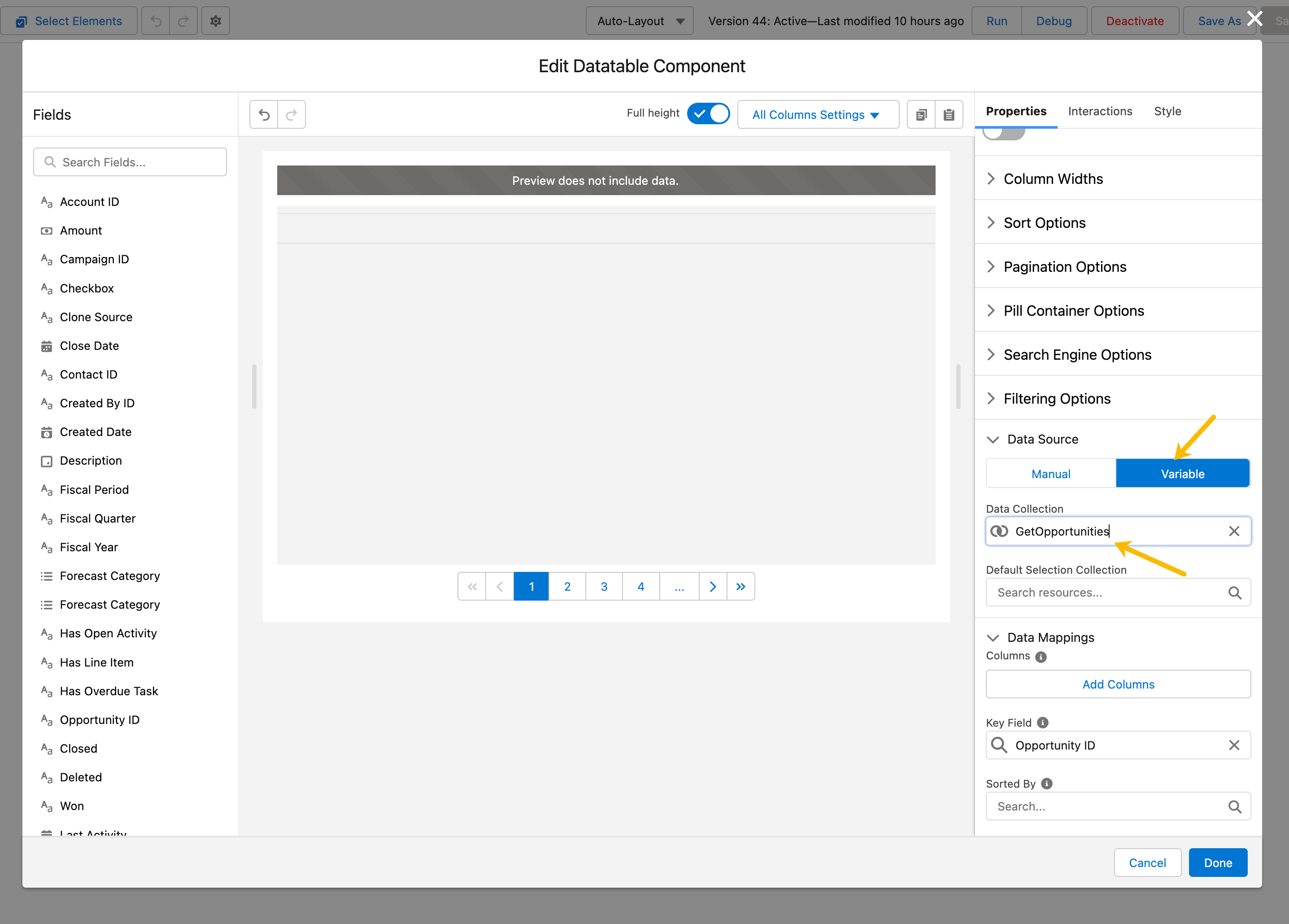
* On the Data Source section, select **`Variable`**
* Select the source collection you want to add fields to your Data Table.
### **3. Drag fields on your Data Table**
* From the left panel, drag fields on your Data Table.
### **4. Activate filters on selected fields**
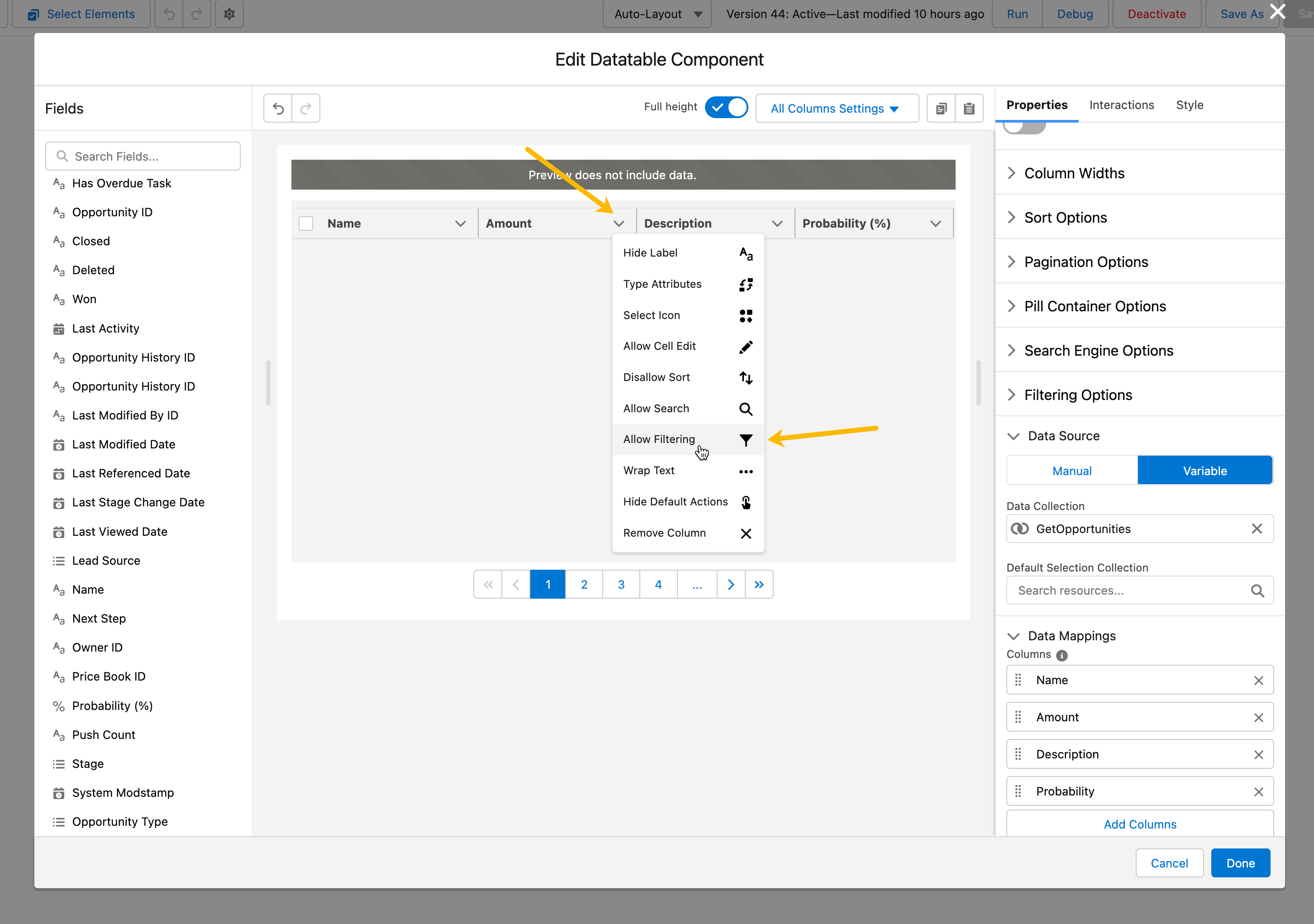
* Click on the arrow next to the field name to allow this field to be filterable.
### **5. Save and test the Data Table**
---
# Agent Instructions
This documentation is published with GitBook. GitBook is the documentation platform designed so that both humans and AI agents can read, navigate, and reason over technical content effectively. Learn more at gitbook.com.
## Querying This Documentation
If you need additional information that is not directly available in this page, you can query the documentation dynamically by asking a question.
Perform an HTTP GET request on the current page URL with the `ask` query parameter, and the optional `goal` query parameter:
```
GET https://docs.avonnicomponents.com/flow/tutorials/components/data-table/adding-filters.md?ask=&goal=
```
`ask` is the immediate question: it should be specific, self-contained, and written in natural language.
`goal` is optional and describes the broader end goal you are ultimately trying to accomplish on behalf of the user. GitBook uses it to tailor the answer towards what is most useful for that goal.
The response will contain a direct answer to the question and relevant excerpts and sources from the documentation.
Use this mechanism when the answer is not explicitly present in the current page, you need clarification or additional context, or you want to retrieve related documentation sections.
.gif?alt=media)