> For the complete documentation index, see [llms.txt](https://docs.avonnicomponents.com/llms.txt). Markdown versions of documentation pages are available by appending `.md` to page URLs; this page is available as [Markdown](https://docs.avonnicomponents.com/dynamic-components/build-with-ai/prompt-library.md).

# Prompt Library

{% hint style="warning" %}

#### 🚧 **Early access**

Build with AI is rolling out gradually and improving with every release. Something unclear, missing, or broken? [Tell us](/dynamic-components/resources/contact-support.md): your feedback directly shapes what we improve next.
{% endhint %}

Every prompt on this page is ready to paste into Claude, Cursor, or GitHub Copilot once your assistant is set up. Copy one, swap in your own objects and fields, and send. The assistant verifies every component and property against the MCP server before generating, so you can be ambitious.

{% hint style="info" %}
**How to adapt a prompt:** replace the objects (`Account`, `Case`, `Opportunity`) and groupings with yours, and describe the outcome you want. You don't need to name properties or settings: the assistant looks up what exists and configures it.
{% endhint %}

## Record page essentials

Components that give a record page its core information at a glance.

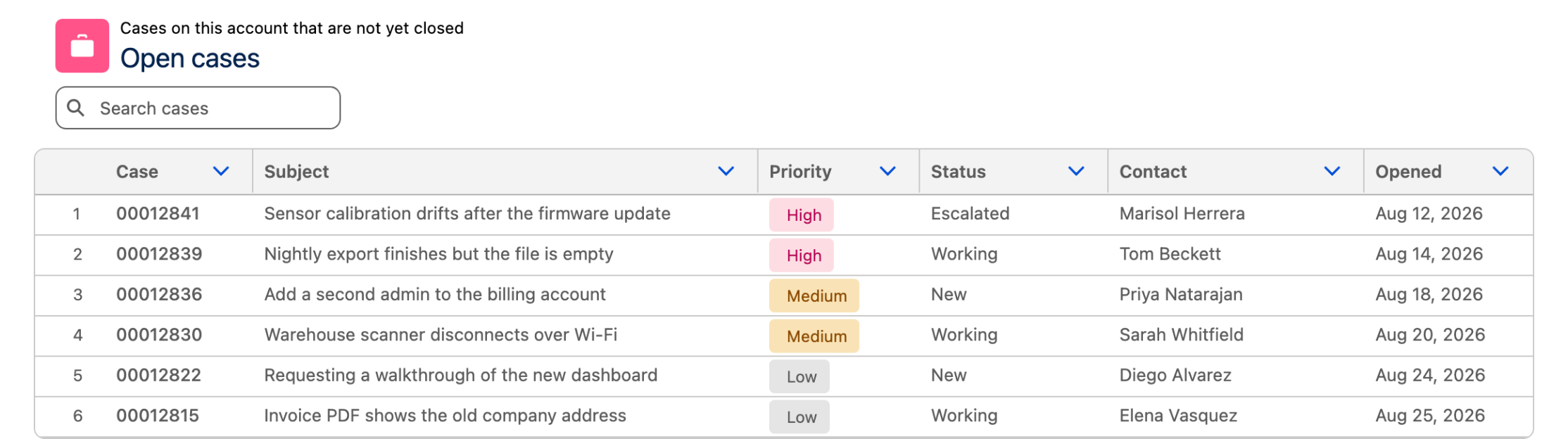
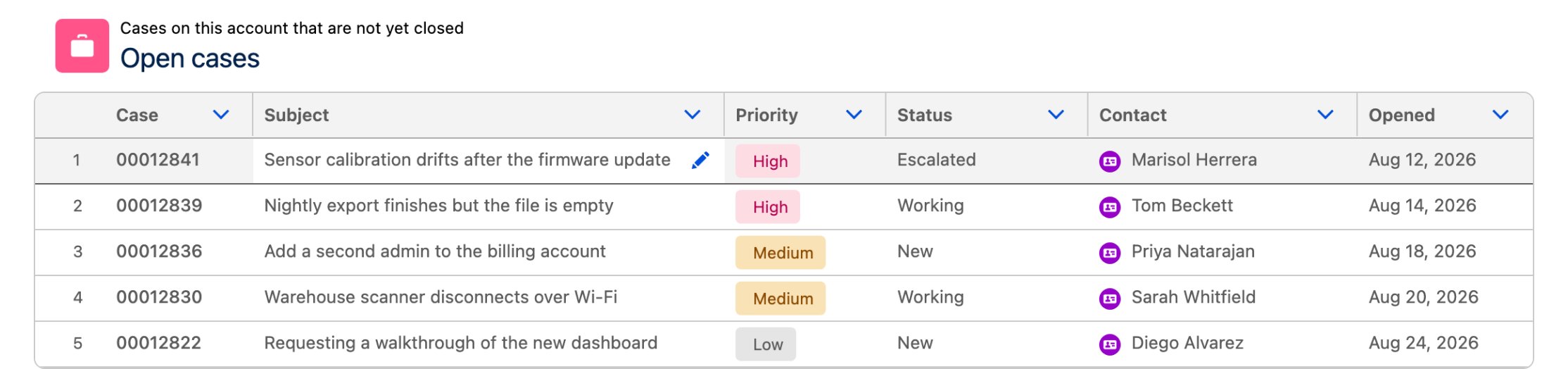
> Create a Dynamic Component for the Account record page showing a Data Table of the account's open Cases with inline editing.

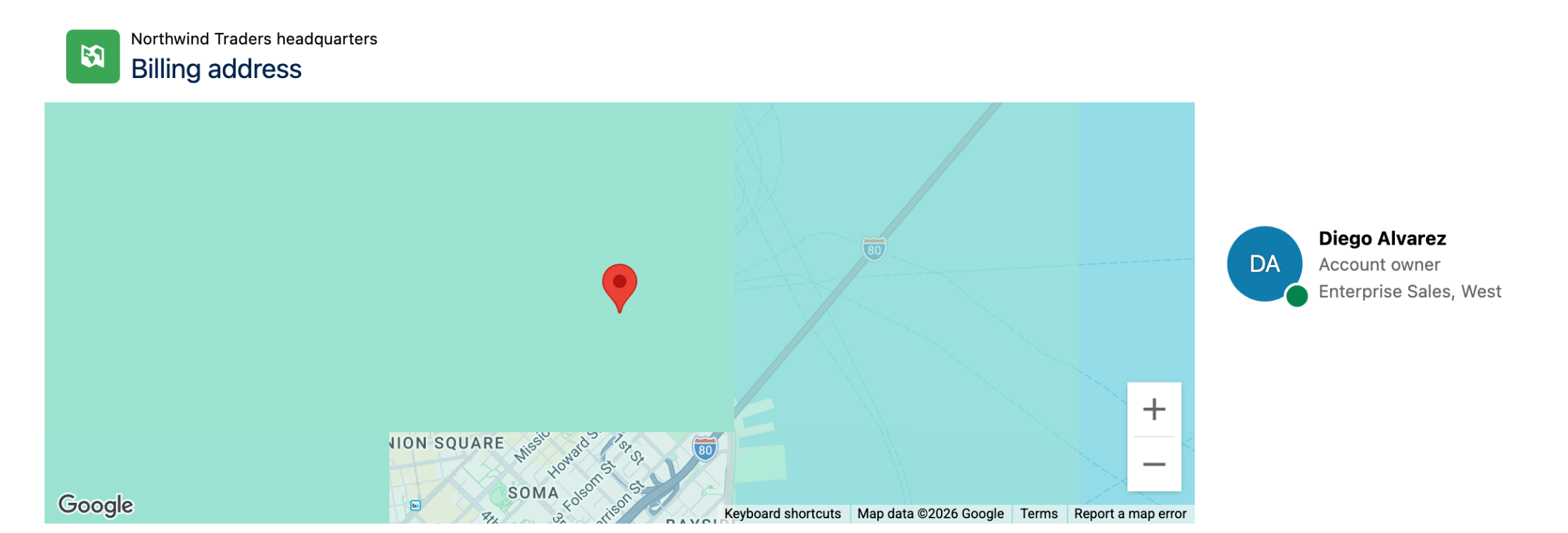
> Build a component with a Map of the account's billing address and an Avatar with the account owner's details.

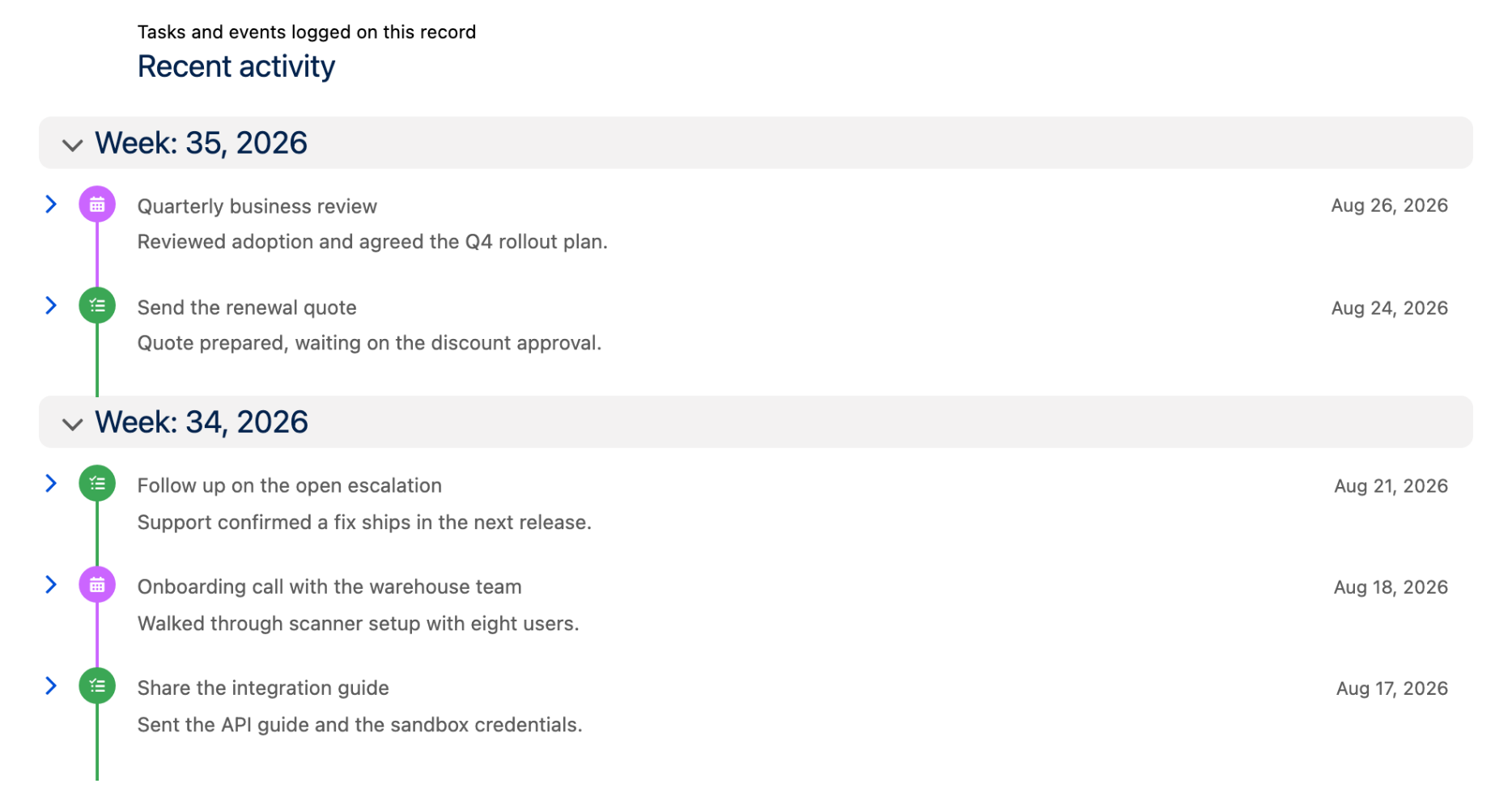
> Add an Activity Timeline of the record's recent Tasks and Events.

## Dashboards and metrics

Turn Salesforce data into something the team actually looks at.

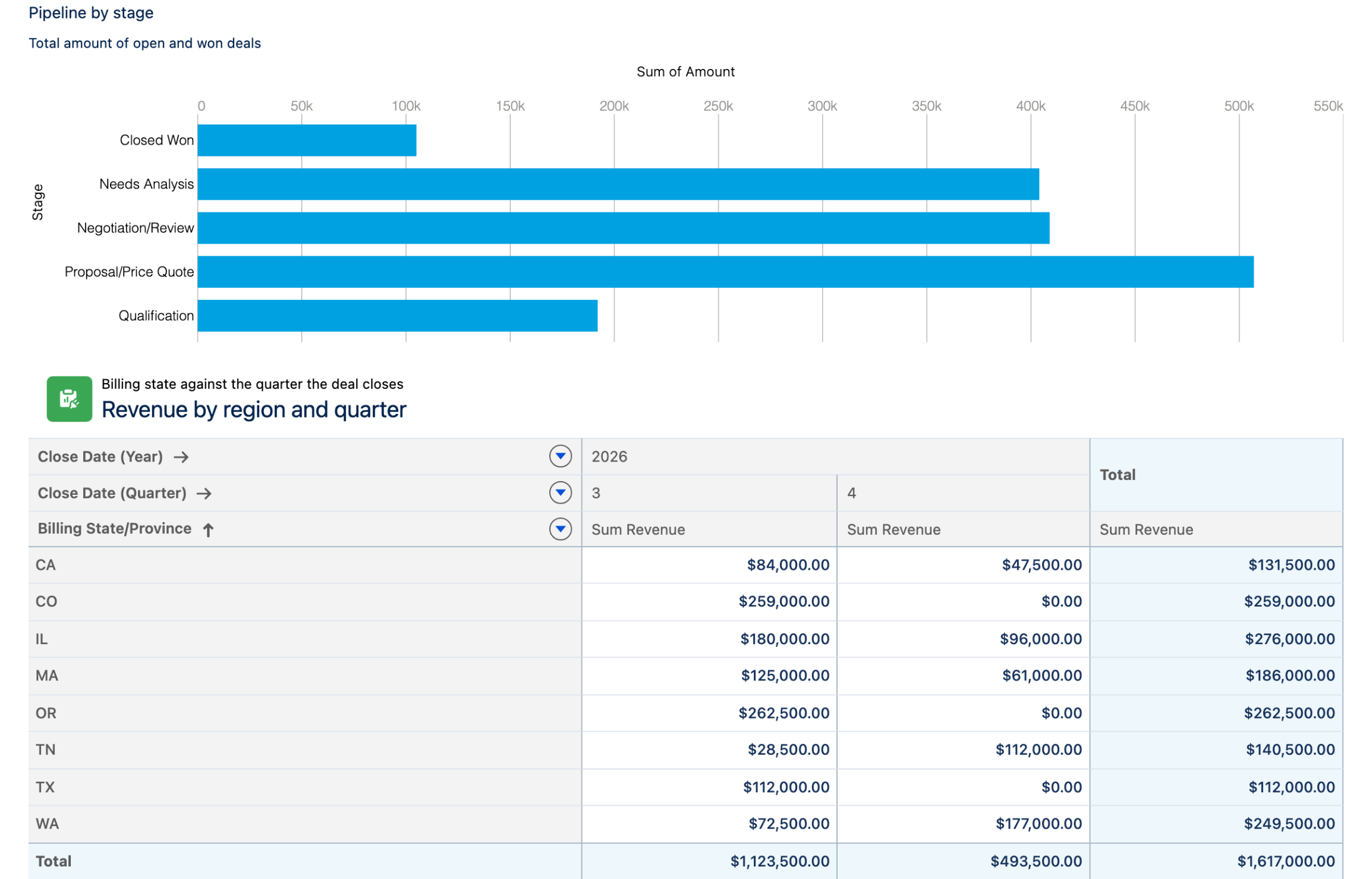
> Build a dashboard component with a Chart of Opportunities by stage and a Pivot Table of revenue by region and quarter.

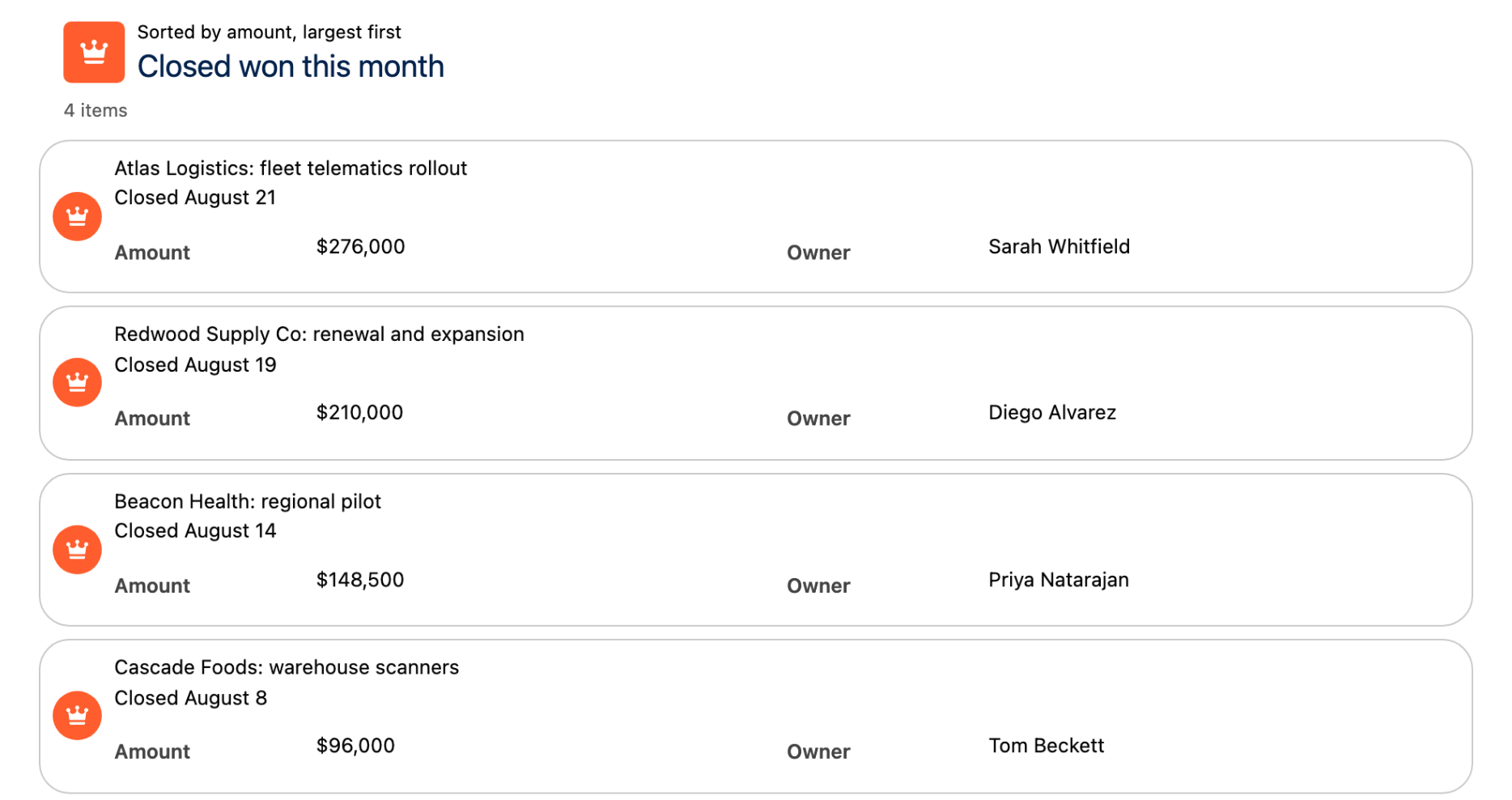
> Create a component showing this month's closed-won Opportunities in a List, sorted by amount.

## Team productivity

Working views for people who live in Salesforce all day.

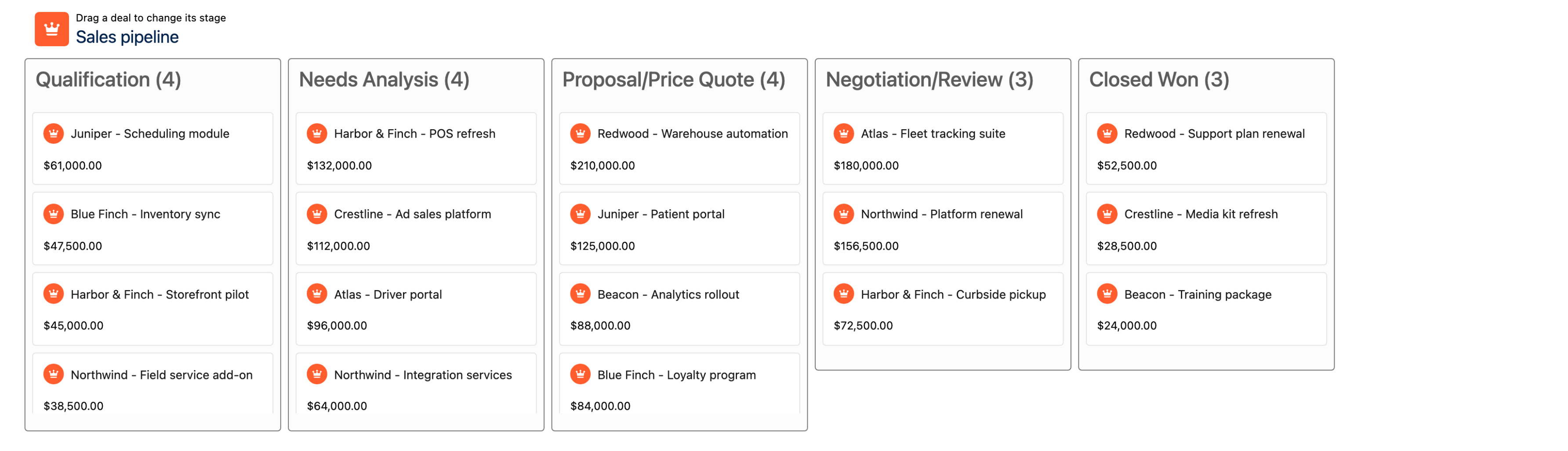
> Create a Kanban of my team's Opportunities grouped by stage, with drag and drop between columns.

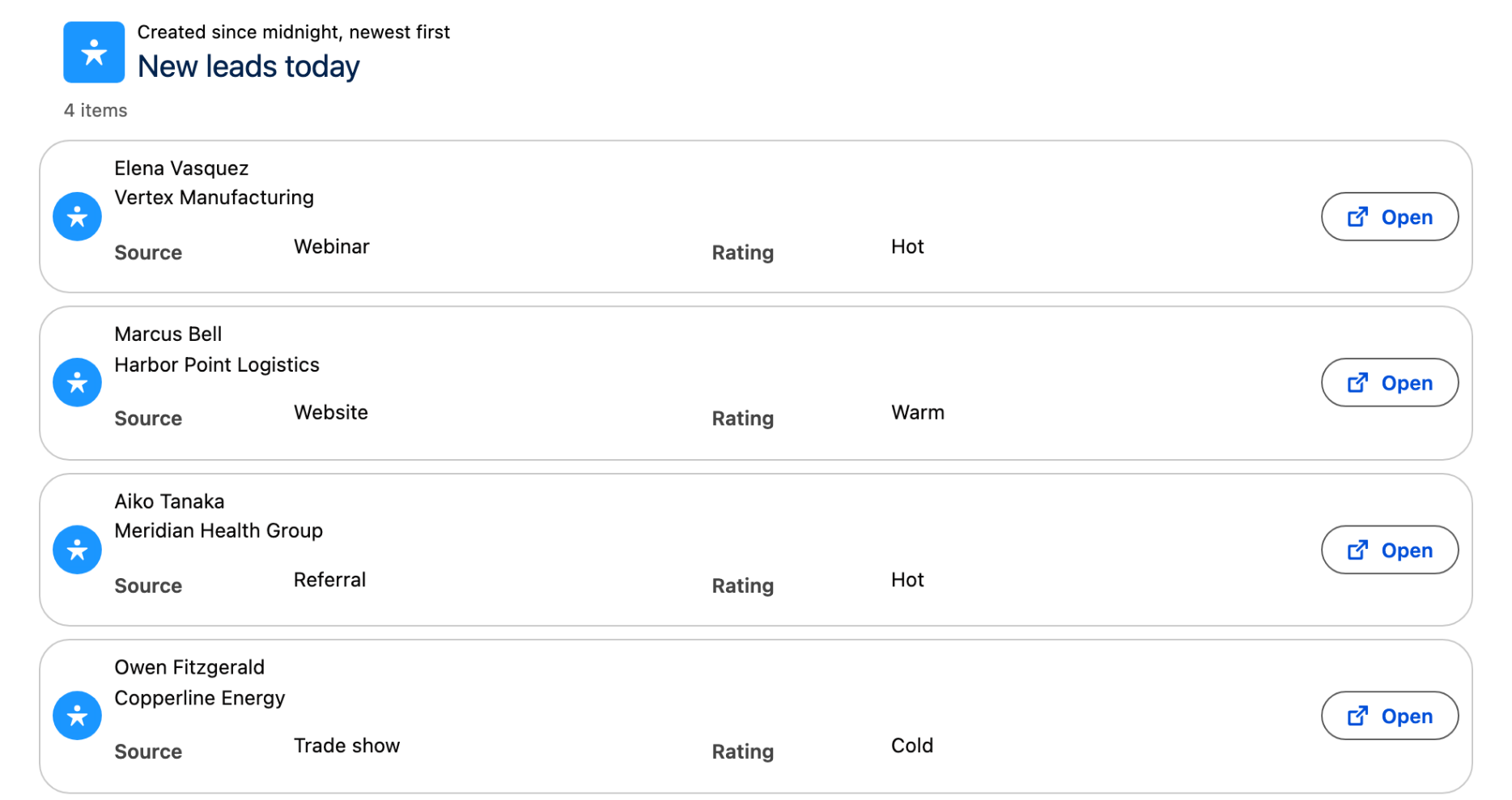
> Build a List of today's new Leads with a button on each row that opens the record.

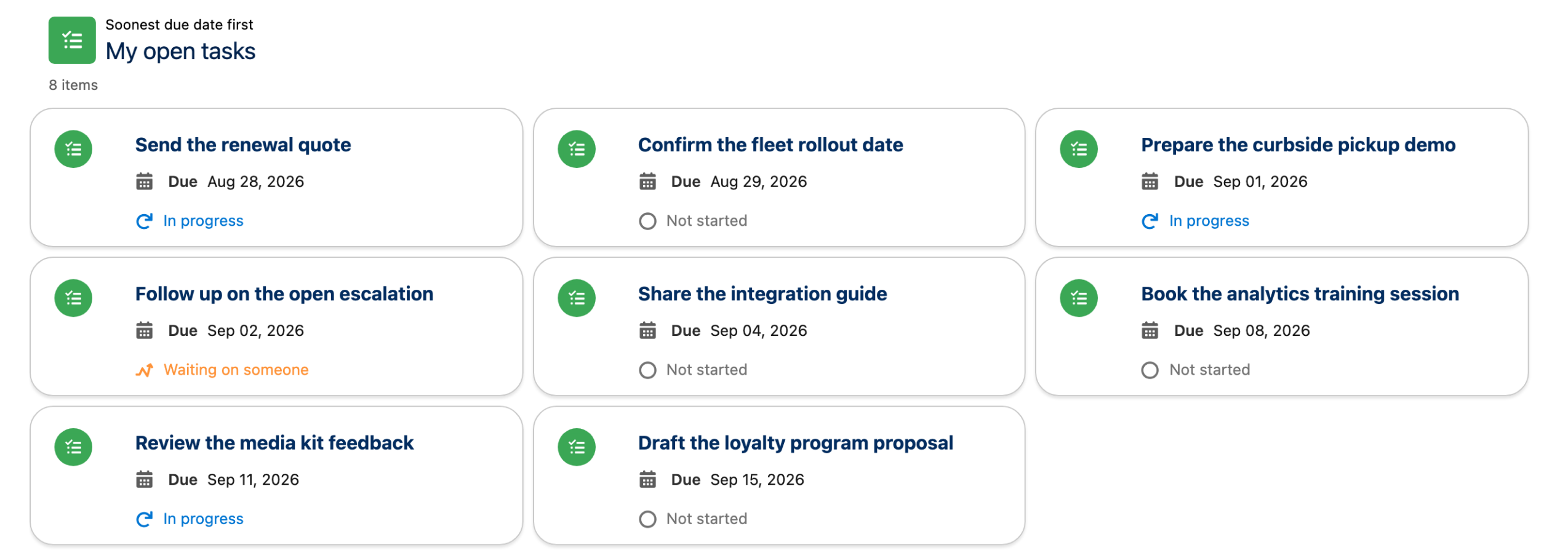
> Create a Repeater of my open Tasks displayed as cards, ordered by due date.

## Look and feel

Styling requests work in plain language too.

> Restyle my component to match our brand: white cards, rounded corners, and our primary color on buttons.

> Make the Data Table denser and add a search bar.

## Complete use cases

When a request spans several artifacts, `avonni-architect` plans and builds all the pieces in the right order.

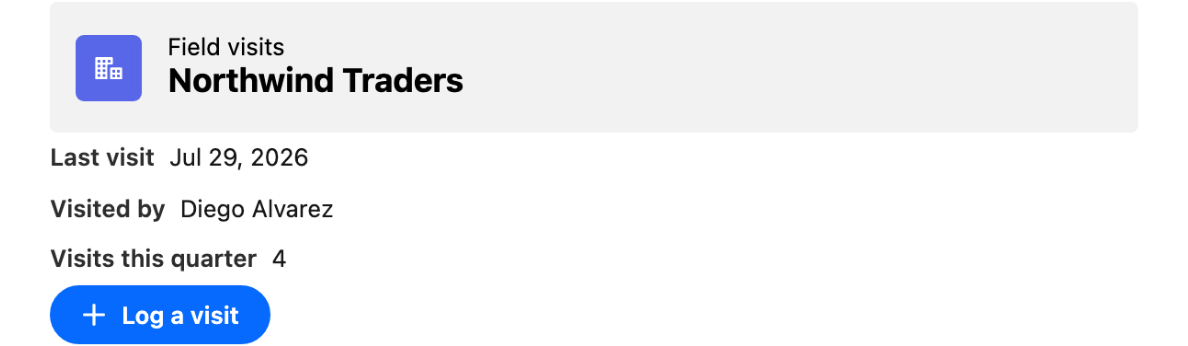
> Create a screen flow for logging a customer visit, and a Dynamic Component with a button on the record page that launches it.

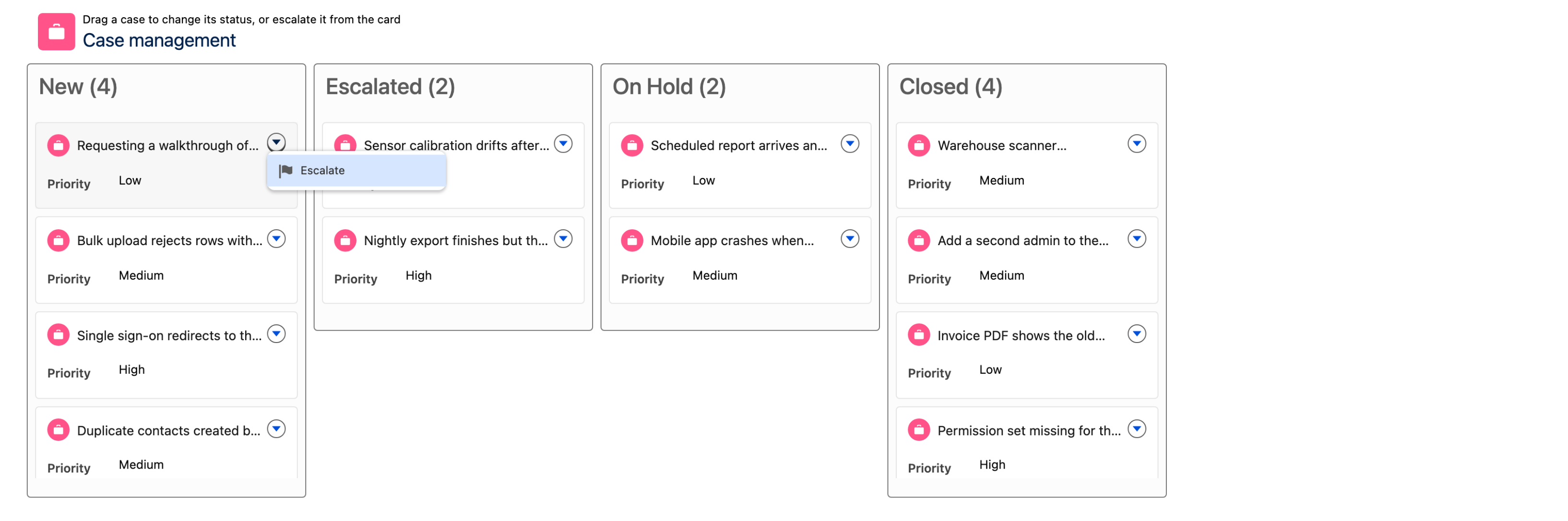
> Build a case management component with a Kanban of Cases, plus a screen flow to escalate a case that opens from each card.

***

## Make these prompts yours

* **Name real objects and fields.** "A Data Table of `Invoice__c` records filtered on `Status__c = 'Overdue'`" beats "a table of invoices".
* **Iterate in the same conversation.** Follow up with "make the columns sortable" or "change the grouping to owner": the assistant updates the same component.
* **Chain goals.** Start with the component, then ask for the flow it should launch. The architect keeps the pieces wired together.

{% hint style="success" %}
Not set up yet? The whole thing takes a few minutes: Setup.
{% endhint %}


---

# Agent Instructions
This documentation is published with GitBook. GitBook is the documentation platform designed so that both humans and AI agents can read, navigate, and reason over technical content effectively. Learn more at gitbook.com.

## Querying This Documentation
If you need additional information that is not directly available in this page, you can query the documentation dynamically by asking a question.

Perform an HTTP GET request on the current page URL with the `ask` query parameter, and the optional `goal` query parameter:

```
GET https://docs.avonnicomponents.com/dynamic-components/build-with-ai/prompt-library.md?ask=<question>&goal=<endgoal>
```

`ask` is the immediate question: it should be specific, self-contained, and written in natural language.
`goal` is optional and describes the broader end goal you are ultimately trying to accomplish on behalf of the user. GitBook uses it to tailor the answer towards what is most useful for that goal.

The response will contain a direct answer to the question and relevant excerpts and sources from the documentation.

Use this mechanism when the answer is not explicitly present in the current page, you need clarification or additional context, or you want to retrieve related documentation sections.